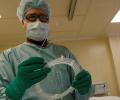
The new regime aims to bring in ease of doing business, as the NITI Aayog has proposed to do away with the need to have manufacturing licences to register medical devices or to get a certificate of compliance.

As fear grips the world, demand for protective gear used by health care professionals and citizens is on a rise. And, supply disruption from China has opened a window of opportunities for Indian medical device makers.

In 2019 investors backed some of the major online healthcare and pharmacy retailers, with PharmEasy leading the deal list. The firm raised funds through the year to bring in around $220 million and the round is yet to be concluded, according to Venture Intelligence data.

Reiterating its position, TRAI, which oversees both the telecom and television sectors in the country, said the amendments suggested on January 1 had been done to correct "distortions" in the market and address pricing issues.
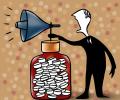
At least two key drugs in the gliptin category have already gone off patent and cheaper variants are crowding the market. Also, several patent expiries are round the corner for the newest category of drugs - SGLT-2 inhibitors or gliflozins.

'If you look at the Number 1 film in India this year across Bollywood and other regional film industries, it is Avengers: Endgame.'

PharmEasy, 1mg and Netmeds believe that their disruptive capabilities will power their brands despite the recent court ruling. The Drug Controller General of India recently directed all state FDAs to stop the online sale of medicines as per a Delhi high court order of last year.
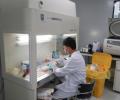
Concerned about the rise of antibiotic resistance and the time it takes for drugs developed abroad to reach Indians, the government is considering holding its own clinical trials. Clinical trials for new drugs have so far primarily been conducted only by private Indian or foreign drug firms. But given the stringent nature of India's regulatory environment for clinical trials, several pharmaceutical companies have moved their trials out of India. As a result, only 1.2 per cent of global clinical trials take place in India.
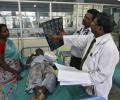
According to a senior government official, the plan is to do "collective bargaining" for certain medical devices and implants by assuring a bulk requirement to the manufacturers. "The requirement for these devices runs into millions. We assure them that the requirement is going to be in bulk. In return, they should offer us better rates," he said.
The government said that "in exercise of extraordinary powers in public interest, conferred by paragraph 19 of the DPCO, 2013", the ceiling prices of 21 key formulations had been increased. These formulations include common medicines like BCG vaccines, penicillin, malaria and leprosy medicines (Dapsone), life-saving drugs like Furosemide (used to treat fluid build-up due to heart failure, liver scarring, or kidney disease), vitamin C, some common antibiotics, and anti-allergy medicines.

This is part of the nine memorandums of understanding (MoUs) worth Rs 5,027 crore, including Hero Group-backed Ather Energy's over Rs 600 crore investment, to establish a manufacturing facility for e-vehicles.

'All of us have a duty to contribute to society. 'The practice of moral leadership will help us in this; it will also help us in business. 'We need to work together to develop the India that we have envisioned in our Constitution - an idea that is equitable, humane and sustainable.'

In the past two years, Xiaomi has expanded its chain of offline stores across formats - 6,000 Mi Preferred Partner stores and 75 Mi Homes on a franchise-based model, besides exclusive small-format Mi Stores added last year to penetrate Tier-II, -III and -IV cities and towns.

India CMD Ramkumar Ramamoorthy clarified Cognizant would continue hiring, and that the earlier job-cut announcement was but a small one, considering the company had around 290,000 employees globally.

The company will now focus on specialty products in Japan; it is open to inorganic opportunities, especially in India.

Revenue from convenience fees has grown at a compound annual rate of 85 per cent for multiplex chain operator Inox Leisure and 58 per cent for PVR.
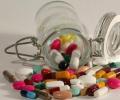
The intention of the government is to cap prices of drugs that are essential and which the public widely uses.

The drug that it would supply is called Olanzapine, used to treat schizophrenia and bipolar disorder.

GSK is continuing with investigations into the potential source of the NDMA, which is a known environmental contaminant and found in water and foods, including meats, dairy products, and vegetables.

Contributions made to public funded universities, IITs, national laboratories and autonomous bodies engaged in conducting research in science, technology, engineering and medicine has now been recognised as part of CSR by the government.
